In one line
Neither word has a legal or lab definition. Exotic usually means sought-after, often newer genetics with strong bag appeal and loud terpenes, nearly always grown indoors. Top shelf means a seller's own highest grade, a ranking inside one menu. Only some of what sits behind either word can be checked: grow method, COA numbers, dates and the source of the genetics.
In this note
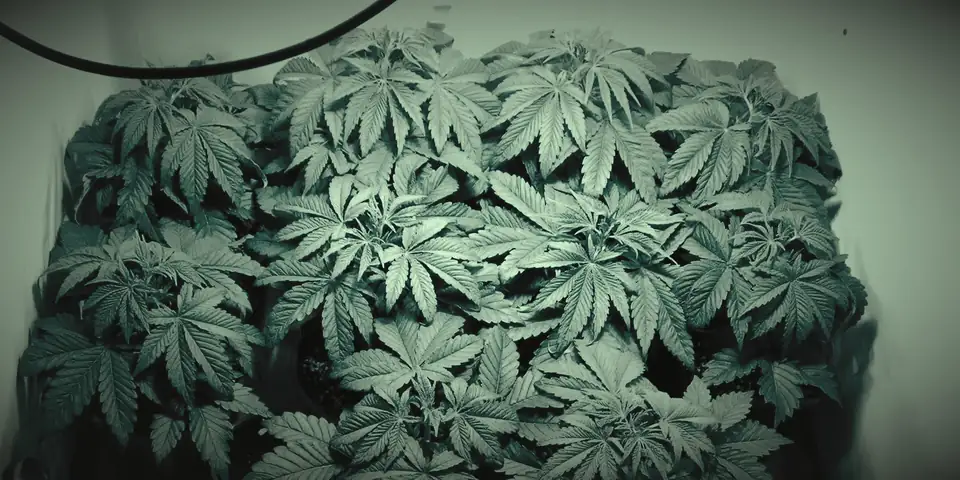
“Exotic” and “top shelf” are not regulated terms. No statute, USDA rule or lab standard defines either one. In THCA flower, exotic usually means in-demand, often newer genetics with dense, frosty buds and a loud terpene profile, almost always grown indoors. Top shelf means the highest grade in one seller’s lineup. That is a ranking, not a property of the plant. The useful question is which parts of either claim you can check.
The words, side by side
| Term | What sellers usually mean | Defined by law or a lab? | What you can verify |
|---|---|---|---|
| Exotic | Hype or hard-to-get genetics, bag appeal, loud nose | No | Strain claim (weakly), photos, COA terpene total |
| Top shelf | The seller’s best grade | No | Only against that seller’s other grades |
| Indoor | Grown under artificial light in a closed room | No legal definition, but a factual claim | Grower disclosure, photos of the grow |
| Light-dep | Greenhouse with blackout covers to control flowering | Same | Grower disclosure |
| Greenhouse | Grown under glass or film with sunlight | Same | Grower disclosure |
| Craft / small batch | Small runs, often hand-trimmed | No | Batch size on the COA or listing |
| Za / zaza | Slang for exotic | No | Nothing beyond “exotic” |
| Gas / loud | Strong fuel or pungent aroma | No | Smell; total terpenes on the COA (partly) |
| Smalls | Small whole buds, sorted by size | No | Photos, the smalls lot’s own COA |
| Mids | Middle grade | No | Only relative to the seller’s range |
Only one line in this table is backed by a measurement on paper: what the COA reports. Everything else is either a disclosure you take on trust or a word.
What makes a strain exotic?
Three things, usually together:
- Genetics in demand. Strains like Lemon Cherry Gelato, Gary Payton, Runtz, Permanent Marker and GMO became exotic through breeder reputation, limited clone access and attention, not through any certification. Many are clone-only cuts, which means the name is easy to copy and the plant is not.
- Bag appeal. Dense, well-trimmed buds, heavy trichome coverage, sometimes color. Indoor rooms produce this most reliably, which is why exotic and indoor are close to synonyms in practice.
- A loud nose. Strong aroma when the bag opens. This is partly measurable as total terpenes on the COA. The rest comes from compounds a standard panel does not report.
Potency is not on the list on purpose. A high THCA figure is easy to market, but THCA ranges for exotic and classic strains overlap heavily. When grades are compared side by side, the terpene total and the condition of the flower usually separate them more than THCA does.
What makes something top shelf?
The phrase comes from retail shelving, where the most expensive bottles sit highest. With flower, it means a seller has ranked a Batch above its other Batches. That makes it a useful signal inside one menu and almost no signal across sellers. One seller’s top shelf can be another seller’s mid-tier.
Inside a single seller, ask what the ranking is based on. If a seller ranks by a published, measurable rule, such as COA terpene totals or a grow method, you can check it against the COA. If the ranking is unexplained, all you know is the price.
A four-step check for any exotic or top-shelf claim
| Step | Ask | Pass looks like |
|---|---|---|
| 1. Batch | Is there a COA for this exact Batch? | Lot code on the COA matches the bag |
| 2. Numbers | Delta-9, THCA, total THC, total terpenes | All reported; delta-9 at or below 0.3% dry weight for hemp today |
| 3. Dates | Harvest date and test date | Recent and in a plausible order (harvest, then test) |
| 4. Lab | Accreditation and sample ID | ISO/IEC 17025, sample ID checkable on the lab’s site |
If a listing passes all four, “exotic” is a fair description of what you are getting. If it passes none, the word is the only thing you are buying.
Log 2026-10-03: grade is not a legal category
As of October 3, 2026, the law does not care whether flower is exotic, top shelf or mids. Federal hemp is defined as 0.3% delta-9 THC or less on a dry-weight basis (7 U.S.C. 1639o). State law decides whether THCA flower may be sold as hemp at a given address, and several states, including California under AB 8 (DCC), already route flower only through licensed cannabis retail.
On December 11, 2026, the federal test becomes total THC including THCA, at 0.3%. That comes from Section 781 of P.L. 119-37, signed November 12, 2025, with the date for naturally occurring cannabinoids set by H.R. 6500, signed September 2, 2026. Indoor exotics with high THCA are among the furthest over that line. A 30% THCA Batch computes to about 26.3% total THC, close to 88 times the limit. After that date, exotic strains stay available in the licensed-dispensary lane under state law. In the hemp-retail lane, they do not continue as high-THCA flower.
Sources
- 7 U.S.C. 1639o
- Congress.gov: H.R. 5371 (P.L. 119-37), H.R. 6500
- CRS IF13136, August 17, 2026
- California DCC: hemp
Not legal advice. Last reviewed October 3, 2026.
Asked at the desk
What makes a strain exotic?
In practice, three things together. The genetics are in demand and harder to get, often clone-only cuts. The buds have strong bag appeal. The terpene profile is loud. No regulator or lab defines the word.
Is exotic the same as top shelf?
No. Exotic describes the genetics and the market around them. Top shelf is a seller's own grade ranking. A seller's top shelf can hold classic strains, and a hyped strain grown badly is not top shelf anywhere.
Does exotic mean higher THCA?
Not necessarily. THCA ranges overlap across exotic and classic strains. The terpene total and the condition of the flower usually separate grades more than THCA does. Compare COAs, not labels.
Does an exotic or top-shelf grade change THCA's legal status?
No. As of October 3, 2026, federal hemp is tested at 0.3% delta-9 THC. From December 11, 2026, it is tested at 0.3% total THC including THCA, whatever the grade.
Log 2026-10-04 Last checked and updated on October 4, 2026.